
Start here
Learn lay betting in the right order.
Use this hub to move from the basics into liability, exchange odds, race research, staking, and public results. Lay Picks is research-only, so the final decision always stays with you.
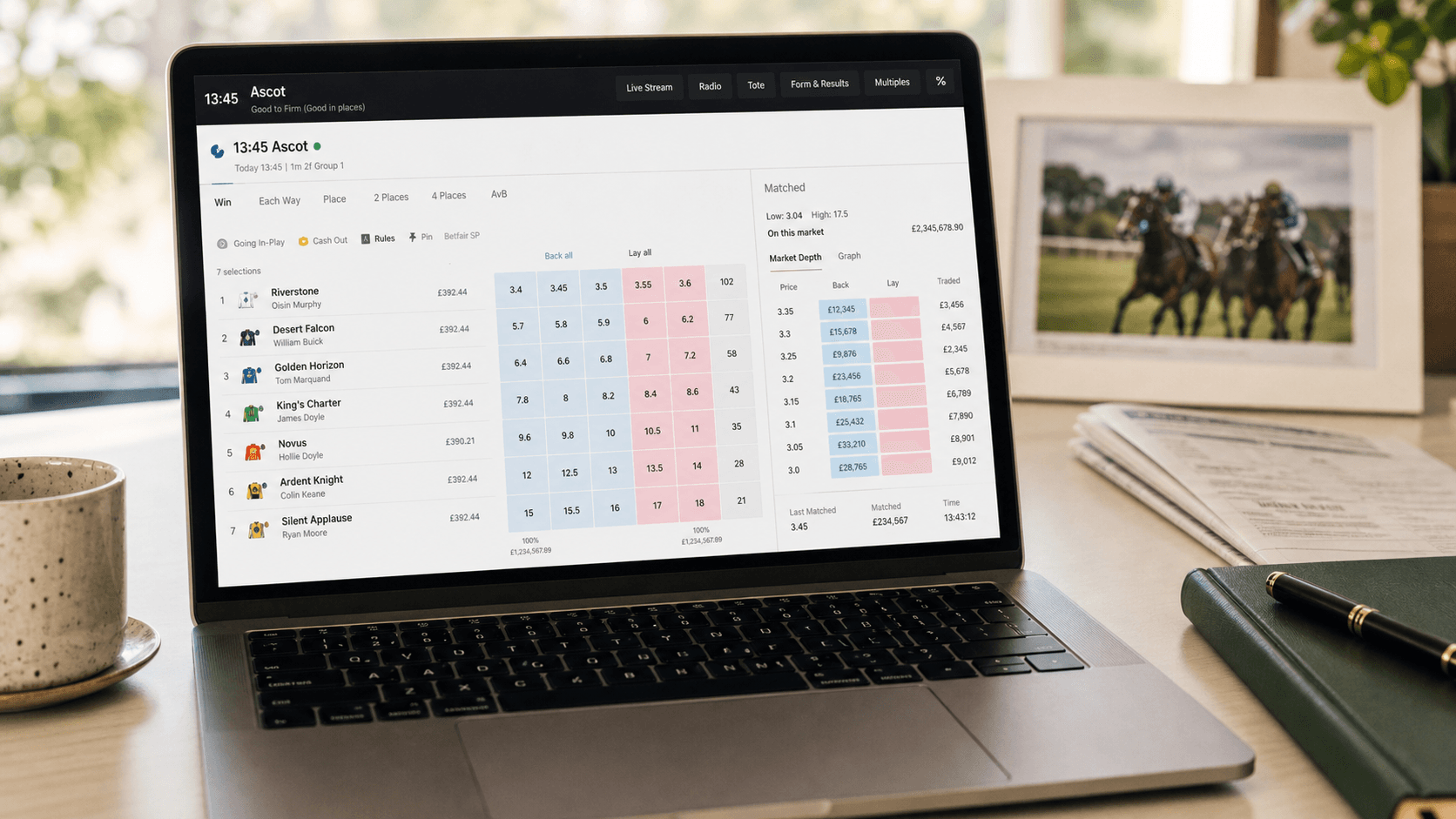
New to laying
Start with the concept
Understand what it means to lay a horse, how exchanges work, and why liability is the first risk check.
Checking risk
Calculate the downside
Use odds and stake size to see the liability before thinking about any manual exchange decision.
Checking trust
Review public results
Look at settled lay wins, lay losses, daily archives, and methodology before judging the research.
Core topic clusters
Five core topics to work through
Start broad, then get specific: lay betting, lay betting tips, liability, staking, and betting exchange education.
Lay betting
The core concept, backing-versus-laying difference, and why exchange users must think from the layer's side.
Open pillarLay betting tips
How to read tips as research prompts, not instructions, with evidence, price, and skip discipline.
Open pillarLiability
The amount at risk if the laid horse wins, including odds caps, calculator checks, and loss context.
Open pillarStaking
Responsible staking, bank visibility, tracker habits, and avoiding emotional recovery after losing lays.
Open pillarBetting exchange
Exchange matching, liquidity, lay prices, commission, and comparing exchange options for horse racing.
Open pillarNew course research
Racecourse guides for lay betting
Deep course notes for Chester, York, Ascot, Newmarket, and the main Scottish courses, focused on draw, pace, going, field size, stamina, and the track-specific warning signs that can change a lay view.
Choose a learning path
Pick the path that matches your next question. Each route keeps the same principles visible: research-only guidance, read-only exchange context, public proof, and manual control.
View all guidesStart with the basics
Learn what lay betting means, how backing differs from laying, and why exchanges make lay bets possible.
Understand risk and liability
Focus on the amount at risk, the lay odds, and the discipline needed before any manual decision.
Move into racing research
Apply the concepts to UK and Irish racing, racecard evidence, exchange prices, and vulnerable runners.
Compare exchanges and research styles
Choose exchanges, compare liquidity, and understand the difference between a tip and a documented research case.
See how Lay Picks works
Understand the read-only exchange context, PLAY/SKIP research flow, and why users stay in control.
Review results and tracking
Use transparent historical pages and tracker education to review performance without chasing losses.
Make a more informed decision
Compare the public record, understand the risks, and choose practical tools for your own research.
Use free tools and references
Shareable resources for liability, racecourse context, staking records, and plain-English lay betting terms.
What this hub is for
The learning centre is the route for anyone who wants to understand Lay Picks before using the app. It explains what the platform does, what it does not do, and why liability, psychology, and manual control matter.
It is deliberately educational rather than promotional. Lay Picks provides research, PLAY/SKIP context, and tracking support. Users make their own final decisions.
What to read first
If you are new, start with what is lay betting, then read lay betting liability.
If you already understand exchanges, move to horse racing lay betting strategy and results methodology.
Related guides
These are the strongest next hubs for readers who want definitions, transparent results, or course-specific racing context.
Lay betting glossary
A quick reference for beginner terms across liability, exchange markets, and racing context.
Read guideResults methodology
Understand how public results are counted before reading the settled record.
Read guideRacecourse guides
Use course notes for draw, pace, going, distance, and track-specific lay checks.
Read guideLay Picks is for informed adults who want a clearer research routine. It is research and tracking software only, never automatic betting. You stay responsible for every manual decision. 18+ only. Read the risk disclaimer.