
Sandown racecourse guide
Sandown Racecourse Lay Betting Guide: Pace, jumping rhythm, ground and trip
A horse-geek Sandown Racecourse guide for lay betting research, covering pace, jumping rhythm, ground and trip, under-cap lay checks, protected profiles, and race-shape traps.
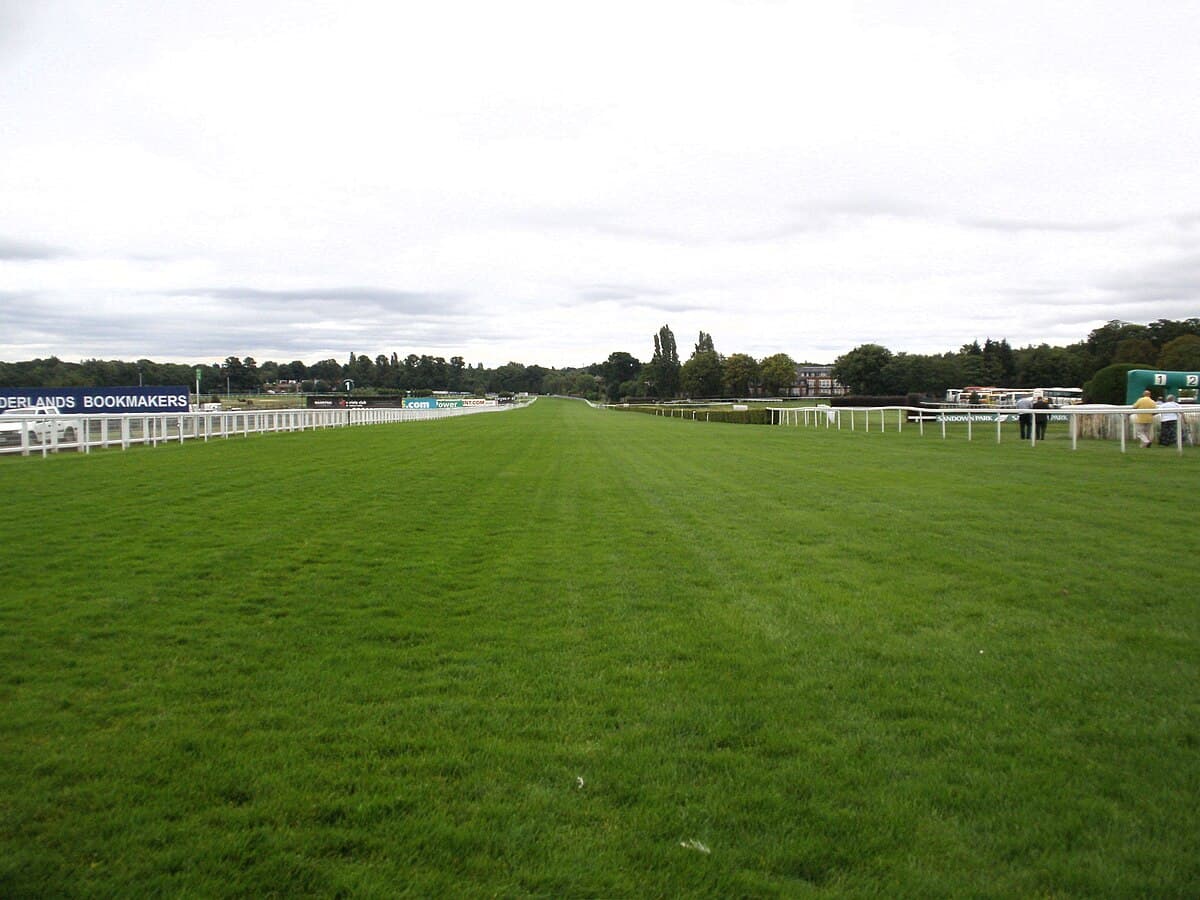
Location
Surrey, England
Code
Flat and jumps
Direction
Right-handed
Racing
Flat and National Hunt
Shape
Stiff, right-handed track with famous uphill finish and demanding fences
Run-in
Uphill finish
Quick lay view
Sandown is a quality filter: the stiff finish, railway fences, and fair but demanding Flat course can punish horses whose chance depends on easy rhythm. For lay betting, Sandown is useful when a short-priced runner has a hidden stamina, jumping-speed, or finishing-effort weakness.
Sandown punishes weak finishers and poor jumpers; protect horses with class, stamina, and fluent rhythm.
Horse-geek notes
Over jumps, the railway fences can change the race quickly. A horse that loses rhythm there may not recover before the climb.
The uphill finish asks more of strong travellers than a flat-track replay might suggest.
On the Flat, Sandown is fair but still exposes weak finishers, especially when the pace turns sustained.
Course or similar stiff-track form is meaningful protection, particularly for horses that keep finding under pressure.
A Sandown lay case is strongest when the favourite has class but the track magnifies its specific weakness.
Sandown lay betting checklist
Test the finish
A runner that travels strongly and finds little can be a better Sandown lay than a more exposed grinder with proven stamina.
Audit railway-fence fluency
For chases, jumping speed and rhythm down the back straight are not optional details.
Respect stiff-track proof
Course form, uphill finishes, and races where the horse kept responding are protection signals.
Check pace pressure
A free-going favourite can be vulnerable if rivals force it to spend energy before the hill.
Distance notes
Flat sprints / mile
A fair test, but the uphill finish can still expose horses short of a final effort.
Middle distances
Sustained pace and balance matter. Question horses that won tactical races without needing to battle.
Jumps
Railway-fence rhythm and stamina up the hill are the core checks. A tidy jumper at a softer track may be less safe here.
Draw and pace
Pace pressure matters because Sandown can turn early keenness into late weakness.
Over fences, a prominent horse that jumps accurately can put others under pressure quickly.
Hold-up horses get a fair chance only if the pace is honest and they jump cleanly.
On the Flat, draw claims should be tied to trip and field shape rather than treated as universal.
Going checks
Soft ground makes the finish and jumping rhythm more demanding.
Good ground can protect class, but it also makes railway-fence errors costly.
Stiff-track soft-ground wins are more relevant than easy wins on flatter layouts.
Lay betting at Sandown
Lay betting at Sandown
Sandown lay betting is about whether the horse can keep performing when the course asks late. Lay Picks treats the hill and railway fences as practical risk checks, not decorative course notes.
Sandown in a results review
A Sandown result is most useful when the pre-race concern is visible in the settled race: weak finish, jumping error, or overbet pace setup. That is why course notes link back to methodology and archive review.
How Lay Picks handles Sandown
The Sandown layer can protect reliable stiff-track horses or support a PLAY when price, pace, stamina, and jumping all point to a vulnerable favourite.
Lay red flags
Strong traveller with repeated weak finishes.
Chaser that loses ground at fences or lacks railway-fence speed.
Free-going favourite facing pace pressure.
Short price off a flat or easier-track performance.
No evidence of finding up a hill.
Best use cases
A favourite's class is obvious but its finishing strength is not.
A chase candidate has a jumping-rhythm question.
You need to separate stiff-track protection from generic good form.
Related guides
Sandown course notes are only one layer. Tie them back to strategy, racing tips, and responsible betting before making a manual call.
Horse racing lay strategy
Connect course notes to a full race research process with PLAY/SKIP discipline.
Read guideHorse racing lay tips
See how racecourse angles fit into a useful lay tip before opposing a runner.
Read guideResponsible lay betting
Keep course bias, liability, staking discipline, and manual control in the same decision.
Read guideBest reading path
Follow the lay betting learning route
Move through the core guides in order: basics, liability, exchange mechanics, strategy, racecourse context, and transparent results methodology.
Step 1
What is lay betting?
Start with the basic exchange concept: opposing a selection rather than backing it to win.
Open guideStep 2
Liability
Understand the amount at risk before looking at tips, strike rates, or staking.
Open guideStep 3
Exchange guide
Learn how lay odds, liquidity, matching, and commission affect a usable price.
Open guideStep 4
Strategy
Turn runner vulnerability, public checks, price, and skip discipline into a process.
Open guideStep 5
Racecourse guides
Add course shape, draw, pace, going, and distance context before trusting a lay angle.
Current stepStep 6
Results methodology
Read how settled public results are counted before judging any performance record.
Open guideOther racecourse guides
References
These are course-information and image-license references. Lay Picks turns them into original lay betting research notes and does not place bets automatically.
Lay Picks is for informed adults who want a clearer research routine. It is research and tracking software only, never automatic betting. You stay responsible for every manual decision. 18+ only. Read the risk disclaimer.